
This fascination with alternative stories inspired me to write The Thirteenth Apostle, which centers on another alternative story of Jesus. The premise of this book is that there were Dan Browns spinning similar stories well before Dan Brown. They were called Gnostics, and they wrote a number of books—the so-called gnostic gospels—that told alternative stories to one told by the Christian Church. One of those surfaced a few decades ago: the Gospel of Judas.
As a refresher, Judas Iscariot is the infamous disciple who betrayed Jesus with a kiss, handing him over to the religious leaders—which lead to his fake trial by Roman authorities and execution by crucifixion.
Yet this gnostic gospel turns the entire narrative of the New Testament Gospels on its head, presenting Judas not as the great betrayer, but the great hero who had been ordered by Jesus himself to carry out his deed.
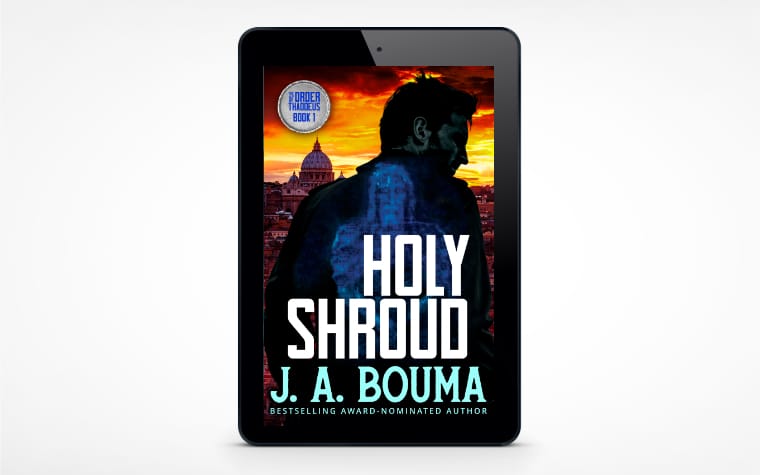
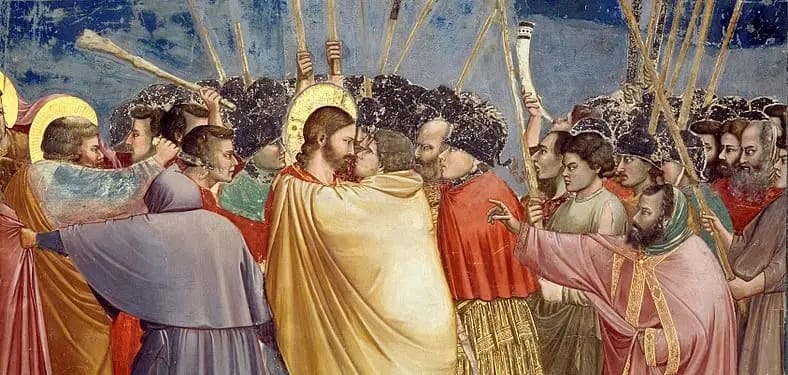
Not since another gnostic gospel, the Gospel of Thomas, had there been such a challenge to accepted belief surrounding the person and work of Jesus of Nazareth. Of course, the religious conspiracy theorists insisted it was proof positive that the Church had suppressed and oppressed alternative stories told about Jesus’ life by minority voices, requiring a complete rethinking of traditional Christian orthodoxy. Which is what Dan Brown himself had argued in his novel and several others have since argued with the renewed attention given to the gnostic gospels.
It was one of the most significant finds from early Christian literature discovered in our lifetime—right up there with the Dead Sea Scrolls and Nag Hammadi gnostic texts of the early twentieth century. Here is a little overview of The Gospel of Judas:
It offers “The secret account of the revelation that Jesus spoke in conversation with Judas Iscariot during a week three days before he celebrated Passover.”
The secret of Jesus’ true person and work is given only to Judas. He alone understands Jesus, and the disciples do not. In fact, they follow a different, false god from the one of Jesus: the God of the Old Testament, which is typical of Gnosticism.
Not only is Judas the true disciple who know and understands Jesus, he is the true disciple who does what Jesus wants. The vision referenced where the disciples were portrayed as priests perform holy duties and actions in unholy ways underscores this. The other eleven disciples are portrayed as violating the religious laws while invoking Jesus’ name; their deeds of defilement don’t match their confession of Jesus.
The eleven, then, not only don’t truly know Jesus, they also don’t truly follow him. What’s more: they’ve lead everyone else astray! Which means the historic orthodox faith is a false representation of the real revelation of Jesus—an important feature of Gnosticism.
Judas is portrayed as the ‘thirteenth spirit’ who leads humanity into a true understanding of Jesus and a true understanding of themselves.
There is a lengthy section where Jesus teaches Judas about cosmology, the origins of the universe, earth, and humanity. Of particular interest is what it says about us: that a certain elite group of people have gnosis, knowledge of their true inner divine-selves, and will live on; others don’t and not only live in ignorance, but will die, simply fading away into oblivion.
Jesus tells Judas “you will exceed all of them,” so that he truly becomes the thirteenth apostle standing above and outside the other Twelve, having achieved gnosis.
In the end, while the other disciples abandoned Jesus, Judas reminded his true, faithful disciple by handing him over to be killed. This wasn’t an act of betrayal, but instead an act of obedience. Typical to Gnosticism, Jesus needed to escape the trappings of the physical body to return to the eternal spiritual realm. Judas made that happen, making him the best disciple and Jesus’ most intimate friend.
Ultimately, Judas does Jesus a favor, showing how salvation not only comes through Jesus’ revelation of our true humanity, solving the problem of ignorance. But showing how salvation comes at death when the soul can escape back to the eternal spiritual realm, our true home.
The Gospel of Judas had been known by experts on early Christianity because of a reference made by Irenaeus, bishop of Lyon, in his famous Against Heresies tract combating false teaching in early Christianity. Consider this fascinating revelation:
Others again declare that Cain derived his being from the Power above. They declare that Judas the traitor was thoroughly acquainted with these things, and that he alone, knowing the truth as no others did, accomplished the mystery of the betrayal; by him all things, both earthly and heavenly, were thus thrown into confusion. They produce a fictitious history of this kind, which they style the Gospel of Judas.
Up until the twentieth century scholars wondered about this cryptic reference, whether it was a genuine codex or not. And if so, what did it contain, and what was Irenaeus’s concern with it? Those questions were answered in 2006 when the so-called Codex Tchacos was unveiled by National Geographic containing the Gospel of Judas and three other known gnostic texts. The history behind this fascinating early Christian document coming to light recounted in the book is accurate.
The third-century codex had originally been found in 1978 during an excavation along the banks of the Nile River 120 miles south of Cairo. Eventually it wound up in the hands of Frieda Nussberger Tchacos, a wealthy dealer in ancient art. She eventually persuaded National Geographic and a small team of scholars to translate and verify the manuscript’s authenticity. Once they showcased the find and translation through a special television production and in print editions, the gnostic gospel made international waves—mostly because of the alternative story it told about Christianity’s most infamous, nefarious character: Judas Iscariot.
The alternative story told by this so-called “gospel”—one that is centered far less on Jesus and much more on Judas. After all, unlike the New Testament Gospels who are all the Gospel according to…Matthew, Mark, Luke, and John, this gnostic one is the Gospel of Judas—it’s good news isn’t about Jesus, but about Judas and the supposed enlightenment he brings humanity. The enduring witness of the apostles preserved for us in the Gospels of Matthew, Mark, Luke, and John recount the good-news story of Jesus—life, death, and resurrection. And there is more than enough historical and manuscript evidence to verify their original story, which can and should form the foundation of our own faith in Christ.
This witness of the apostles is being constantly challenged. For generations people stretching back to the earliest days of the Church—those referenced by Irenaeus—have sought to destroy the memory of this witness and undermine the story told in their Gospels. In contrast to the Gnosticism of the Gospel of Judas, the New Testament Gospels and the broader story of the Bible offers a far different story—and a much more hopeful one! In this story we find:
A message meant for the whole world—not the super elite few that Gnosticism claims.
A God who created the world on purpose and with purpose and said that it was good. All of it, material and immaterial. Which is the exact opposite of the gnostic myth.
Our problem isn’t that we are ignorant of the divinity within ourselves, but that we are badly bent and in desperate need of rescue.
The good news is that God didn’t just abandon us by sitting up in some lofty realm in outer space to leave us to our own devices, as Gnosticism teaches.
Instead, God became one of us. Not the pseudo-human deity who wore the human body like a spacesuit as the gnostics taught. But a real, live human being, Jesus of Nazareth, who lived this life and understands this life.
Not only did live with us and for us, he died for us. For me, for you two, for the whole world. Not to escape it, but to save it! But more than that: to restore it, to re-create it, to put it back together again to the way that he intended it to be at the beginning.
Which the resurrection proves. Jesus came back to life in a real, physical body. He ate fish with his friends and showed them the scars left behind on his hands and feet and side. Which means that Jesus didn’t want liberation from the flesh; he was happy to live in a body! And he will be plenty happy to give all of his children brand-spanking new ones someday when he returns to Earth to make all things new.
Perhaps N. T. Wright said it best at the conclusion of Judas and the Gospel of Jesus, his scholarly analysis of the gnostic gospel. After reiterating the above summation of what the Bible teachers, he writes, “This is the real gospel. It has to do with the real Jesus, the real world, and above all the real God. As the advertisements say, accept no substitutes” (146).
Especially, the tale told by The Gospel of Judas and religious conspiracy writers like Dan Brown and, as Radcliffe says, his counterparts: the Dan Browns with PhDs who sow doubt about the story of Jesus and what really happened. The Gospels of Mathew, Mark, Luke, and John are the only ones that tell the historic, truthful old, old story of Jesus and his love. Accept no substitutes.
Kasser, Rodolphe, Marvin Meyer, and Gregor Wurst. The Gospel of Judas. Washington, DC: National Geographic, 2006. http://bouma.us/judas1
Ehrman, Bart D. The Lost Gospel of Judas Iscariot. New York: Oxford University Press, 2006. http:// bouma.us/judas2
Wright, N. T. Judas and the Gospel of Jesus. Grand Rapids: Baker Books, 2006. http://bouma.us/judas3
You can view a PDF of the original Gospel of Judas text I used as the basis of this story for yourself, here: http://bouma.us/judas4
Read the book inspired by faith + history

The Thirteenth | Order of Thaddeus 2
Join My Reader Club. Get a Free Book
- Exclusive discounts and special offers
- Early access to new books or events
- Behind-the-scenes articles, updates, and inspiration